Therefore, each enzyme has a unique structural formula that depends on the amino acid sequence of that specific enzyme.
Instead of a single formula, here's what you can understand about the structure of enzymes:
* Primary Structure: This refers to the linear sequence of amino acids in the protein chain. This sequence is dictated by the gene that encodes the enzyme.
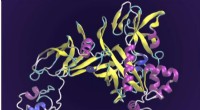
* Secondary Structure: This refers to the local folding patterns of the polypeptide chain, such as alpha-helices and beta-sheets. These structures are stabilized by hydrogen bonds.
* Tertiary Structure: This is the overall three-dimensional shape of the protein, which arises from interactions between different parts of the polypeptide chain. These interactions can include hydrogen bonds, ionic bonds, hydrophobic interactions, and disulfide bridges.
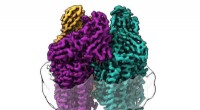
* Quaternary Structure: Some enzymes consist of multiple polypeptide chains (subunits). The arrangement of these subunits in space constitutes the quaternary structure.
To understand the structure of a specific enzyme, you would need to look up its amino acid sequence and then use computational tools to predict its three-dimensional structure.
Let me know if you'd like to learn more about a specific enzyme!