Here's a breakdown:
* Chromatin: This is the loose, thread-like form of DNA that exists within the nucleus of a cell when it's not dividing. It's a complex of DNA and proteins (histones).
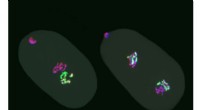
* Chromosomes: These are the tightly coiled, condensed structures that form during cell division (mitosis or meiosis).
So, during cell division, the chromatin undergoes a process called condensation, where it becomes tightly packed and forms the distinct X-shaped structures we recognize as chromosomes. This ensures that the DNA is properly replicated and distributed to the daughter cells.