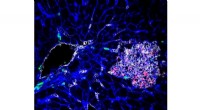
Multicellular organisms are like intricate orchestras, where individual cells act as specialized instruments playing unique roles to create a harmonious whole. Here's how they compare to functions of cells in a single organism:
1. Specialization:
* Single-celled organisms: Every cell performs all essential life functions (nutrition, reproduction, etc.).
* Multicellular organisms: Cells differentiate and specialize to perform specific tasks, forming tissues, organs, and organ systems. For example, nerve cells conduct impulses, muscle cells contract, and digestive cells break down food. This division of labor allows for greater efficiency and complexity.
2. Communication and Cooperation:
* Single-celled organisms: Cells function independently.
* Multicellular organisms: Cells communicate and cooperate through various mechanisms like chemical signals, gap junctions, and cell-to-cell contact. This enables coordinated action and a higher level of organization.
3. Complexity and Size:
* Single-celled organisms: Limited in size and complexity.
* Multicellular organisms: Can reach enormous sizes and complexity, allowing for greater diversity and adaptation to various environments.
4. Life Span:
* Single-celled organisms: Individual cells have a finite lifespan, but the organism can continue through reproduction.
* Multicellular organisms: Individual cells have a lifespan, but the organism as a whole can have a much longer life, due to constant cell renewal and replacement.
5. Response to Environment:
* Single-celled organisms: Respond directly to their immediate environment.
* Multicellular organisms: Have specialized systems that respond to internal and external stimuli, allowing for more sophisticated responses.
Example:
Consider a human body:
* Cells: Nerve cells transmit signals, muscle cells contract for movement, and epithelial cells form protective barriers.
* Tissues: These cells group together to form tissues like nervous tissue, muscle tissue, and epithelial tissue.
* Organs: Tissues work together to form organs like the brain, heart, and stomach.
* Organ Systems: Organs coordinate to form systems like the nervous system, circulatory system, and digestive system.
* Organism: All systems work in harmony to create a functional human being.
In essence:
Multicellular organisms are far more complex than single-celled ones due to the specialization and cooperation of their cells. This division of labor allows for greater efficiency, adaptation, and complexity, enabling life to flourish in a vast range of environments.