Here's a breakdown of the function of flagella:
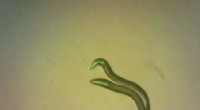
* Movement: The primary function of flagella is to propel the organism through its environment. They achieve this by rotating or undulating, creating a force that moves the cell forward.
* Sensing: Flagella can also act as sensory organelles, detecting changes in the environment, such as chemicals or temperature, and directing the organism towards favorable conditions.
* Adherence: In some bacteria, flagella can help the organism attach to surfaces.
* Other Functions: In certain organisms, flagella may have specialized roles, such as in the formation of biofilms or in the delivery of genetic material.
Key Points:
* Types of Movement: Different types of flagella exhibit different movement patterns. For example, bacterial flagella rotate like propellers, while eukaryotic flagella undulate like whips.
* Cellular Location: Flagella can be located at different positions on the cell, including at the poles, sides, or even all over the surface.
* Evolution: Flagella are thought to have evolved independently in different lineages, indicating their importance for survival.
Understanding the function of flagella helps us understand how single-celled organisms move, navigate their environment, and interact with other cells.