The environment encompasses all the external factors that influence an organism's life and development. This includes:
* Physical factors:
* Abiotic factors: Temperature, light, water, air, soil, pH, humidity, etc.
* Biological factors:
* Biotic factors: Other organisms (plants, animals, fungi, bacteria), competition, predation, disease, etc.
* Social factors:
* For social organisms: Interactions within the species, population density, social hierarchy, etc.
* Anthropogenic factors:
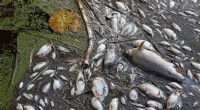
* Human-induced changes: Pollution, habitat destruction, climate change, introduction of invasive species, etc.
Understanding the environment is crucial for studying an organism because it directly affects:
* Survival: Organisms must adapt to their environment to obtain resources (food, water, shelter) and avoid threats.
* Growth and development: Environmental conditions influence an organism's growth rate, physical characteristics, and life cycle.
* Behavior: An organism's behavior is often influenced by its surroundings, including seeking food, avoiding predators, and finding mates.
* Evolution: Over time, organisms evolve to better suit their environment through natural selection.
So, when studying an organism, it's important to consider its environment as a vital part of its life and how it functions within its ecosystem.