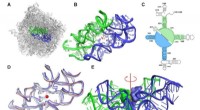
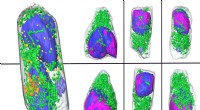
* Are made of cells: Living things are composed of one or more cells, which are the basic units of life. Inanimate objects lack this cellular structure.
* Reproduce: Living organisms can create new individuals of the same type. Inanimate objects cannot reproduce on their own.
* Grow and develop: Living organisms increase in size and complexity over time. Inanimate objects do not grow or change in this way.
* Respond to stimuli: Living organisms react to changes in their environment. Inanimate objects do not respond to stimuli.
* Maintain homeostasis: Living organisms regulate their internal environment to stay alive. Inanimate objects do not have internal mechanisms for maintaining balance.
* Use energy: Living organisms obtain and use energy from their surroundings. Inanimate objects do not require energy to function.
* Adapt and evolve: Living organisms can change over time to better suit their environment. Inanimate objects do not evolve.
In summary, living organisms are defined by their ability to perform these seven life processes, which are absent in inanimate objects.