Here's why:
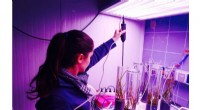
* Photosynthesis is the process where plants, algae, and some bacteria use sunlight, water, and carbon dioxide to create their own food (glucose) and release oxygen as a byproduct. This glucose is then used as a source of energy and carbon for the organism's growth and development.
Let's look at the other options:
* Cellular respiration is the process of breaking down glucose (and other food molecules) to release energy in the form of ATP. This process *uses* carbon, not acquires it.
* Nitrogen fixation is the process of converting atmospheric nitrogen gas into a usable form for plants. It doesn't directly involve carbon.
* Glycolysis is a process that breaks down glucose into pyruvate. While it involves carbon, it doesn't acquire carbon from the environment.
Let me know if you have any more questions!