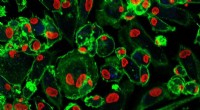
* Loss of Structure: The cell membrane is the outer boundary of a cell, providing structural integrity and shape. Without it, the cell would become a disorganized blob of cytoplasm and organelles.
* Loss of Homeostasis: The cell membrane acts as a selective barrier, controlling what enters and leaves the cell. This is crucial for maintaining a stable internal environment (homeostasis). Without it, the cell would be overwhelmed by harmful substances and lose essential nutrients.
* Inability to Communicate: The cell membrane plays a role in cell signaling and communication. Without it, cells wouldn't be able to receive or send signals, disrupting vital processes like growth, division, and interaction with other cells.
* Loss of Organelles: Without a membrane to hold them in place, organelles like the nucleus, mitochondria, and Golgi apparatus would disperse and become dysfunctional.
* Cellular Death: Ultimately, without a functioning cell membrane, a cell would quickly die. It would be unable to maintain its internal environment, perform essential functions, or interact with its surroundings.
In short, without a cell membrane, cells wouldn't be able to survive, and without cells, a human body wouldn't exist.