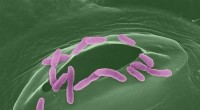
Here's a breakdown:
* Phage: A virus that infects bacteria.
* Replication: The process by which a phage multiplies itself inside a host cell.
* Progeny: The offspring or descendants of a phage.
In simpler terms:
Imagine a phage like a tiny robot that enters a bacterial cell. The robot uses the cell's machinery to build copies of itself. These copies are the progeny phage, which are released from the cell and go on to infect other bacteria.
Here's how it works:
1. Attachment: The phage attaches to the surface of a bacterial cell.
2. Entry: The phage injects its genetic material (DNA or RNA) into the cell.
3. Replication: The phage's genetic material takes over the bacterial cell's machinery to produce new phage components.
4. Assembly: The newly produced phage components are assembled into new phage particles.
5. Release: The newly assembled phage particles are released from the cell, often by lysing (bursting) the cell.
The progeny phage are now ready to infect other bacteria, continuing the cycle of phage infection.







![Dog Breed & Behavior: Separating Fact from Fiction | [Your Brand Name]](https://www.scienceaq.com/article/uploadfiles/202210/2022102023561850_S.jpg)