Here's a breakdown:
Single-celled organisms:
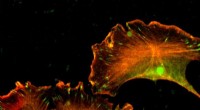
* Single cell performs all functions: Each cell in a single-celled organism is responsible for everything the organism needs to do, including obtaining nutrients, producing energy, eliminating waste, and reproducing.
* High level of independence: These cells are self-sufficient and can survive independently.
* Simple structure: The cells are typically simpler in structure, with fewer specialized organelles.
* Examples: Bacteria, Amoeba, Yeast
Multicellular organisms:
* Cell specialization: Cells in multicellular organisms are specialized for specific tasks, forming tissues, organs, and organ systems. For example, muscle cells contract, nerve cells transmit signals, and skin cells protect the body.
* Interdependence: Cells within a multicellular organism are interdependent and rely on each other for survival.
* Complex structure: Cells are often more complex in structure, with a wide range of organelles.
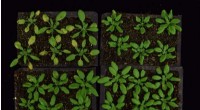
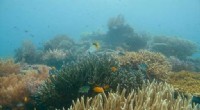
* Examples: Plants, animals, fungi
Here's a table summarizing the key differences:
| Feature | Single-celled Organisms | Multicellular Organisms |
|---------------------|------------------------|-----------------------|
| Number of cells | 1 | Many |
| Cell specialization | No | Yes |
| Independence | High | Low |
| Structure | Simple | Complex |
In essence, the single cell in a unicellular organism must be a jack-of-all-trades, while cells in a multicellular organism can specialize and focus on specific tasks, allowing for greater complexity and diversity.