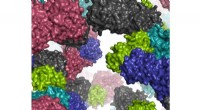
Transport proteins are specialized proteins embedded in the cell membrane that act as gatekeepers, controlling the passage of molecules in and out of the cell. They are essential for maintaining the cell's internal environment and carrying out crucial functions like nutrient uptake and waste removal.
Here's what they do:
* Selectively allow molecules to pass: They act like checkpoints, only letting specific molecules through, often based on size, shape, and charge.
* Facilitate transport: They help molecules cross the cell membrane, which is otherwise a barrier for many substances.
* Maintain concentration gradients: They help regulate the balance of molecules inside and outside the cell, ensuring the proper functioning of cellular processes.
Analogy:
A good analogy for transport proteins is a doorman at a nightclub.
* The doorman (transport protein) decides who gets in (which molecules pass through the membrane).
* Some people (molecules) can walk right in (pass through the membrane easily), while others need the doorman's assistance (require a transport protein) to get inside.
* The doorman might be selective, only letting in certain types of people (molecules) based on criteria like age, dress code, or membership (size, shape, charge).
Types of transport proteins:
There are two main types of transport proteins:
1. Channel proteins: These act like tunnels, providing a direct passageway for molecules to move across the membrane. Think of a tunnel under a busy road, allowing cars to pass without stopping at traffic lights.
2. Carrier proteins: These bind to specific molecules, change shape, and then release the molecule on the other side of the membrane. Think of a shuttle bus that picks up passengers at one stop and drops them off at another.
Importance:
Transport proteins are essential for life as we know it. They enable processes like:
* Nutrient absorption: Transporting sugars, amino acids, and other nutrients into the cell.
* Waste removal: Excretions of cellular waste products.
* Signal transduction: Transporting hormones and other signaling molecules across the membrane.
* Maintaining cell volume: Regulating the movement of water and other solutes to ensure proper cell shape and function.
In conclusion, transport proteins are key players in maintaining the life of a cell, allowing it to function properly and interact with its environment. Their role is analogous to a selective doorman, ensuring that only the right molecules enter and leave the cell, maintaining its internal balance.