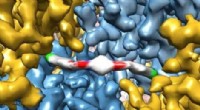
Here's why this ability is unique:
* Specialized Structures: Muscle cells contain specialized proteins, actin and myosin, that are arranged in a way that allows them to slide past each other. This sliding mechanism is the basis for muscle contraction.
* Energy Conversion: Muscle cells are highly efficient at converting chemical energy (from ATP) into mechanical energy, which is the energy of motion. This process is essential for the force generation needed for contraction.
* Nervous System Control: Muscle cells receive signals from the nervous system that trigger the contraction process. This allows for precise control of muscle movements.
While other cells might move, they don't do it in the same controlled, powerful way that muscle cells do. For example, some cells can move by crawling or using cilia, but these movements are much smaller and less forceful than muscle contractions.
In short, muscle cells are the only cells that can generate force and movement through a coordinated, energy-dependent contraction of specialized protein filaments.