1. Evolutionary History: Both Protista and Prokaryotes are considered to be very ancient life forms. Prokaryotes are the oldest life forms on Earth, and Protista emerged later, but still relatively early in the evolution of life.
2. Unicellularity: Many protists are single-celled organisms (unicellular), just like all prokaryotes. However, there are also multicellular protists, so this isn't a universal characteristic.
3. Lack of Specialized Tissues: Neither Protista nor Prokaryotes have specialized tissues or organs like those found in plants and animals.
4. Simple Structure: Both protists and prokaryotes are generally structurally simpler than eukaryotic organisms like plants and animals.
5. Diverse Metabolism: Both protists and prokaryotes exhibit a wide range of metabolic strategies, including photosynthesis, heterotrophy, and chemosynthesis.
However, it's important to understand that Protista and Prokaryotes are also very different:
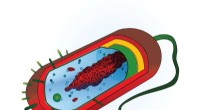
* Cellular Complexity: Prokaryotes are simple cells lacking a nucleus and membrane-bound organelles. Protists, on the other hand, are eukaryotic cells with a nucleus and organelles.
* Genetic Material: Prokaryotes have a single circular chromosome, while protists have multiple linear chromosomes.
* Reproduction: Prokaryotes reproduce asexually through binary fission. Protists can reproduce both asexually and sexually, with a wider variety of reproductive strategies.
In summary: While there are some similarities in their evolutionary history, unicellularity, and metabolic diversity, the differences between Protista and Prokaryotes are far more significant. Protists are eukaryotic, while prokaryotes are not. This difference in cellular complexity leads to many other crucial distinctions between the two groups.