Here's why:
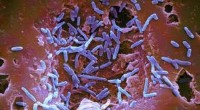
* Prokaryotic cells lack a nucleus and other membrane-bound organelles. Their DNA is located in a region called the nucleoid, but it's not enclosed within a membrane. All of the cell's processes occur in the cytoplasm.
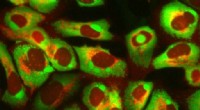
* Eukaryotic cells, on the other hand, have a nucleus that houses their DNA, as well as other organelles like mitochondria, endoplasmic reticulum, Golgi apparatus, lysosomes, and vacuoles. Each organelle has a specialized function, allowing for a much more efficient and organized cellular operation.
This compartmentalization is crucial for eukaryotic cells because it allows them to:
* Carry out multiple processes simultaneously: Different organelles can perform their functions independently, without interfering with each other.
* Maintain a high level of complexity: Compartmentalization allows for specialization and greater control over cellular processes.
* Regulate and fine-tune cellular activities: The separation of processes within organelles provides greater control over reactions and allows for more precise regulation.
So, while prokaryotic cells are capable of performing all the essential functions of life, the presence of membrane-bound organelles in eukaryotic cells enables a much higher level of organization and complexity. This allows them to carry out more specialized and advanced functions, contributing to the diversity of life on Earth.