The process of creating a protein from a DNA blueprint is a fascinating and intricate journey. It involves multiple steps, each crucial for the final protein product. Here's a detailed breakdown:
Step 1: Transcription
* Location: Nucleus
* Starting Material: DNA
* Outcome: Messenger RNA (mRNA)
1. DNA Unwinding: The double helix of DNA unwinds, exposing the gene containing the code for the desired protein.
2. RNA Polymerase Binding: RNA polymerase, an enzyme, binds to the promoter region of the gene, which signals the start of the gene.
3. RNA Synthesis: RNA polymerase moves along the DNA strand, reading the sequence of bases and creating a complementary RNA molecule (mRNA). This process is called transcription.
4. mRNA Processing: The newly synthesized mRNA undergoes processing:
* Capping: A protective cap is added to the 5' end of the mRNA molecule.
* Splicing: Non-coding regions (introns) are removed from the mRNA, leaving only the coding regions (exons).
* Polyadenylation: A tail of adenine bases (poly-A tail) is added to the 3' end.
Step 2: Translation
* Location: Cytoplasm (specifically at ribosomes)
* Starting Material: mRNA
* Outcome: Protein
1. mRNA Binding to Ribosome: The processed mRNA molecule binds to a ribosome, which is a cellular machine responsible for protein synthesis.
2. tRNA Recognition: Transfer RNA (tRNA) molecules, each carrying a specific amino acid, recognize and bind to the codons (three-base sequences) on the mRNA.
3. Peptide Bond Formation: The ribosome moves along the mRNA, reading each codon and bringing the corresponding amino acid to the growing polypeptide chain. Amino acids are linked together by peptide bonds.
4. Chain Elongation: The polypeptide chain continues to grow as the ribosome moves along the mRNA, adding amino acids one by one.
5. Termination: When the ribosome encounters a stop codon, the protein synthesis process ends. The polypeptide chain detaches from the ribosome.
Step 3: Protein Folding
* Location: Cytoplasm, Endoplasmic Reticulum (ER), Golgi Apparatus
* Starting Material: Polypeptide chain
* Outcome: Functional Protein
1. Primary Structure: The sequence of amino acids in the polypeptide chain determines its primary structure.
2. Secondary Structure: The polypeptide chain folds into specific shapes, such as alpha-helices and beta-sheets, due to interactions between amino acids (hydrogen bonds).
3. Tertiary Structure: The polypeptide chain further folds into a complex 3D structure, driven by interactions between side chains of amino acids (hydrophobic interactions, ionic bonds, disulfide bonds).
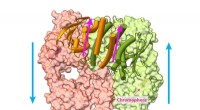
4. Quaternary Structure: Some proteins consist of multiple polypeptide chains (subunits) that associate with each other to form a functional unit.
Step 4: Protein Modification
* Location: ER, Golgi Apparatus
* Starting Material: Folded Protein
* Outcome: Mature Functional Protein
1. Glycosylation: Sugar molecules can be added to the protein, modifying its function and stability.
2. Phosphorylation: Phosphate groups can be added to the protein, which can alter its activity.
3. Other Modifications: Other modifications, like acetylation, methylation, and ubiquitination, can occur, further fine-tuning the protein's function.
Final Product: A Complete Functional Protein
The process culminates in the production of a mature, functional protein ready to perform its specific role in the cell or organism. This journey from DNA to protein exemplifies the intricate coordination of molecular events that underlie life itself.