Here's a breakdown:
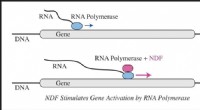
* Nucleotides are the building blocks of nucleic acids (DNA and RNA).
* Each nucleotide consists of three parts:
* A sugar: This is either deoxyribose (in DNA) or ribose (in RNA).
* A phosphate group: This provides the negative charge of DNA and RNA.
* A nitrogenous base: There are five different nitrogenous bases, but only four are used in each nucleic acid:
* DNA: Adenine (A), guanine (G), cytosine (C), and thymine (T)
* RNA: Adenine (A), guanine (G), cytosine (C), and uracil (U)
So, the three bases (adenine, guanine, and cytosine) are found in both DNA and RNA, and the fourth base (thymine in DNA or uracil in RNA) completes the set of four bases that make up a nucleotide.