* Genotype: This refers to the genetic makeup of an organism. It's the specific combination of genes that an individual inherits from its parents.
* Traits: These are the observable characteristics of an organism, like flower color, height, or leaf shape.
Here are some possibilities:
* If both parent plants are homozygous for the same trait: The offspring will have the same trait as the parents. For example, if both parents have purple flowers and are homozygous for that trait, all offspring will have purple flowers.
* If both parent plants are heterozygous for the same trait: The offspring will have a mix of traits. For example, if one parent has purple flowers and is heterozygous and the other parent has white flowers and is heterozygous, the offspring could have purple flowers, white flowers, or a combination of both (like lavender).
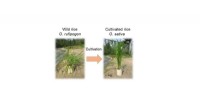
* If the parent plants are homozygous for different traits: The offspring will express the dominant trait. For example, if one parent has purple flowers and is homozygous dominant and the other parent has white flowers and is homozygous recessive, all offspring will have purple flowers.
Key Concepts:
* Dominant traits: These traits are expressed even if only one copy of the gene is present.
* Recessive traits: These traits are only expressed if two copies of the gene are present.
* Heterozygous: An individual has two different alleles for a trait (e.g., one dominant and one recessive).
* Homozygous: An individual has two identical alleles for a trait (e.g., two dominant or two recessive).
In summary, it's impossible to predict the exact appearance of the offspring plant without knowing the specific genotypes of the parent plants. However, understanding the concepts of dominance, recessiveness, and heterozygosity can help you make educated guesses about the possible traits the offspring might inherit.