Here's why:
* Eukaryotic cells are complex cells with a membrane-bound nucleus.
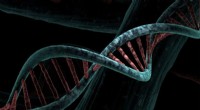
* DNA is a long, complex molecule that contains the genetic instructions for building and maintaining an organism.
* The nucleus acts as the cell's control center, housing the DNA and protecting it from the rest of the cell.
Exceptions:
* Prokaryotic cells (like bacteria) do not have a nucleus. Their DNA is located in a region called the nucleoid, which is not membrane-bound.
* Mitochondria and chloroplasts, which are organelles found in eukaryotic cells, also have their own DNA, known as mitochondrial DNA (mtDNA) and chloroplast DNA (cpDNA), respectively.
Let me know if you have any other questions!