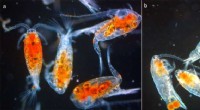
Protists are eukaryotes, meaning they have a true nucleus enclosed within a membrane. This distinguishes them from prokaryotes like bacteria and archaea, which lack a nucleus.
Here's why it's important:
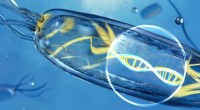
* Organization: The nucleus houses the cell's DNA, keeping it separate and protected from the rest of the cell's activities.
* Control: The nuclear membrane allows for controlled movement of molecules between the nucleus and the cytoplasm, ensuring proper regulation of gene expression and other nuclear processes.
While protists share the eukaryotic characteristic of having a nucleus, they are a diverse group with many different types and features. Some protists are single-celled organisms, while others are multicellular. They exhibit a wide range of metabolic and reproductive strategies.