1. Microscopy:
* Light Microscopy: This is the most common technique, using visible light to illuminate and magnify cells.
* Bright-field Microscopy: Simple and widely available, but only shows the outline and basic structures of cells.
* Phase-contrast Microscopy: Enhances contrast, allowing visualization of internal structures without staining.
* Differential Interference Contrast (DIC) Microscopy: Provides a 3D-like image with enhanced contrast.
* Fluorescence Microscopy: Uses fluorescent dyes or proteins that bind to specific cell components, making them visible.
* Electron Microscopy (EM): Uses electrons instead of light, providing much higher resolution and allowing visualization of ultra-fine cellular structures.
* Transmission Electron Microscopy (TEM): Creates images of thin slices of cells, showing internal structures.
* Scanning Electron Microscopy (SEM): Provides detailed 3D images of the cell surface.
2. Cell Culture:
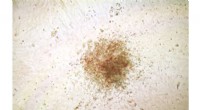
* Growing Cells in Lab: Scientists can culture cells in a controlled environment, allowing them to study their growth, behavior, and responses to different stimuli.
3. Cell Fractionation:
* Breaking Cells Apart: Cells are broken open and their components (like organelles) are separated by centrifugation. This allows scientists to study specific cell parts.
4. Flow Cytometry:
* Analyzing Single Cells: This technique uses lasers to measure the properties of individual cells as they pass through a narrow beam. It can be used to identify different cell types, measure cell size, and analyze DNA content.
5. Biochemical Analysis:
* Studying Cell Chemistry: Scientists can extract and analyze various molecules from cells, such as proteins, DNA, and RNA. This helps understand their function and how they interact within the cell.
6. Genetic Techniques:
* Altering and Studying Genes: Scientists can use techniques like CRISPR to modify genes in cells and study the effects on cell function.
Choosing the right method depends on the specific question being asked.
Here are some examples:
* To see the general shape of a cell: Light microscopy.
* To examine the intricate structure of a mitochondrion: Transmission electron microscopy.
* To study how a specific protein affects cell division: Cell culture and biochemical analysis.
* To identify different types of white blood cells: Flow cytometry.
By combining different techniques, scientists can gain a comprehensive understanding of the complex world of cells.