Eukaryotic Cells
* Larger and more complex: Eukaryotic cells are typically much larger than prokaryotic cells and have a more complex internal structure.
* Membrane-bound organelles: They have a variety of membrane-bound organelles, such as the nucleus, mitochondria, endoplasmic reticulum, Golgi apparatus, lysosomes, and vacuoles. These organelles compartmentalize the cell and allow for specialized functions.
* Nucleus: Eukaryotic cells have a true nucleus, which contains the cell's genetic material (DNA) in the form of chromosomes. The nucleus is surrounded by a double membrane called the nuclear envelope.
* Linear DNA: The DNA in eukaryotic cells is linear and associated with proteins called histones, forming structures called chromosomes.
* Multicellular organisms: Most eukaryotic cells are part of multicellular organisms (plants, animals, fungi, and protists).
Prokaryotic Cells
* Smaller and simpler: Prokaryotic cells are much smaller than eukaryotic cells and have a simpler internal structure.
* Lack membrane-bound organelles: They lack most membrane-bound organelles found in eukaryotic cells.
* Nucleoid: Prokaryotic cells have a nucleoid region, where their DNA is located, but it is not enclosed by a membrane.
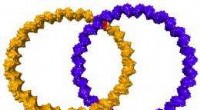
* Circular DNA: The DNA in prokaryotic cells is circular and is not associated with histones.
* Unicellular organisms: Most prokaryotic cells are single-celled organisms (bacteria and archaea).
Here's a table summarizing the key differences:
| Feature | Eukaryotic Cells | Prokaryotic Cells |
|---|---|---|
| Size | Larger | Smaller |
| Complexity | More complex | Simpler |
| Nucleus | True nucleus | No true nucleus (nucleoid region) |
| DNA | Linear, associated with histones | Circular, not associated with histones |
| Organelles | Membrane-bound organelles | Lack most membrane-bound organelles |
| Examples | Plants, animals, fungi, protists | Bacteria, archaea |
In summary: Eukaryotic cells are more complex, larger, and have a true nucleus and membrane-bound organelles, while prokaryotic cells are simpler, smaller, and lack these features. These differences reflect the diverse evolutionary history of life on Earth.