1. Organization:
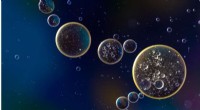
* Even though they are just one cell, single-celled organisms are highly organized. Their cell contains specialized compartments (organelles) that perform specific functions, just like organs in multicellular organisms.
2. Metabolism:
* They take in nutrients, convert them into energy, and expel waste products, just like any other living thing. This process of chemical reactions is called metabolism.
3. Growth:
* Single-celled organisms increase in size and complexity before they reproduce.
4. Reproduction:
* They reproduce by dividing into two identical daughter cells, ensuring the continuation of their species.
5. Responsiveness:
* They react to stimuli in their environment. For example, bacteria can move towards food or away from harmful substances.
6. Homeostasis:
* They maintain a stable internal environment. Single-celled organisms regulate their internal conditions, like temperature and water balance.
7. Adaptation:
* Over generations, single-celled organisms can evolve and adapt to their surroundings. This is how they survive and thrive in diverse environments.
In essence, single-celled organisms, despite their small size, exhibit all the fundamental characteristics of life, making them undeniably living things. They are often described as the simplest forms of life, but they are incredibly complex and important for maintaining the balance of our planet.