1. Flagellar Movement:
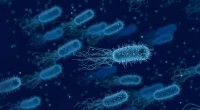
* Mechanism: Microorganisms like bacteria possess whip-like appendages called flagella. These flagella rotate like tiny motors, propelling the cell through liquid environments.
* Types: There are different arrangements of flagella, such as monotrichous (single flagellum), lophotrichous (tuft of flagella at one end), amphitrichous (flagella at both ends), and peritrichous (flagella distributed over the entire surface).
2. Ciliary Movement:
* Mechanism: Some microorganisms, particularly protozoa, use cilia for movement. Cilia are shorter and more numerous than flagella. They beat in a coordinated, wave-like motion, propelling the organism forward.
* Example: Paramecium is a well-known example of a protozoan that uses cilia for locomotion.
Let me know if you'd like more details about these methods, or want to learn about other ways microorganisms move!