* Broad Scope: It encompasses a fundamental principle about all living things, stating that all organisms are composed of cells and that all cells arise from pre-existing cells. This is a very broad and general statement about life.
* Well-Supported Evidence: The cell theory is supported by a vast amount of evidence from many different scientific fields, including microscopy, genetics, and biochemistry.
* Widely Accepted: The scientific community has overwhelmingly accepted the cell theory as a core principle of biology. It has been tested and confirmed through countless experiments and observations over centuries.
* Explanatory Power: The cell theory provides a framework for understanding how life functions, how organisms grow and develop, and how diseases arise. It helps to explain many biological phenomena.
Hypotheses are specific, testable statements that can be tested through experiments. They are usually more limited in scope than theories. While a hypothesis can be elevated to a theory with enough supporting evidence, the cell theory has already accumulated a vast body of evidence and is considered a foundational principle in biology.
Here's a simple analogy:
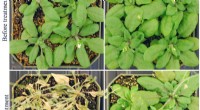
* Hypothesis: "If I add fertilizer to my plants, they will grow taller." This is a specific statement that can be tested with an experiment.
* Theory: "All plants need nutrients to grow." This is a broader statement based on a vast amount of evidence and explains a fundamental aspect of plant biology.
The cell theory is similar to the "all plants need nutrients to grow" example. It is a broad, well-supported statement that explains a fundamental aspect of life.