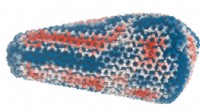
Vesicles are small, membrane-bound sacs that transport substances within the cell. They can be formed from the plasma membrane (the outer membrane of the cell) or from the membranes of internal organelles, such as the Golgi apparatus.
Here's how vesicles form:
1. Budding: A small section of the membrane begins to curve inward, forming a pocket.
2. Pinching off: The pocket pinches off from the membrane, creating a closed, spherical sac (the vesicle).
3. Transport: The vesicle moves throughout the cell, carrying its contents.
Vesicles play a crucial role in various cellular processes, including:
* Transport of proteins and lipids: Vesicles transport newly synthesized proteins and lipids from the endoplasmic reticulum and Golgi apparatus to other parts of the cell.
* Exocytosis: Vesicles fuse with the plasma membrane and release their contents outside the cell.
* Endocytosis: Vesicles engulf substances from outside the cell and bring them inside.
* Signal transduction: Vesicles can carry signaling molecules within the cell, enabling communication between different parts of the cell.
Let me know if you have any other questions.