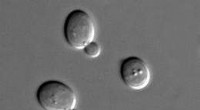
Here's why:
* Nonvascular plants lack a specialized vascular system (xylem and phloem) for transporting water and nutrients. This limits their size and makes them reliant on moist environments.
* Spores are single-celled reproductive units that can survive in harsh conditions and disperse easily. This is crucial for nonvascular plants because they cannot transport their gametes (sperm and egg) long distances.
Examples of nonvascular plants that reproduce by spores:
* Mosses
* Liverworts
* Hornworts
How they reproduce:
1. Spore production: Nonvascular plants produce spores in structures called sporangia.
2. Spore dispersal: Spores are released from the sporangia and dispersed by wind or water.
3. Germination: If a spore lands in a suitable environment, it germinates and grows into a gametophyte (the haploid stage).
4. Gamete production: The gametophyte produces male and female gametes.
5. Fertilization: Sperm fertilizes the egg, forming a zygote (the diploid stage).
6. Sporophyte development: The zygote grows into a sporophyte, which produces spores and completes the life cycle.