Interactions Between Organisms:
* Competition: Organisms compete for limited resources like food, water, space, and mates. This can be interspecific (between different species) or intraspecific (within the same species).
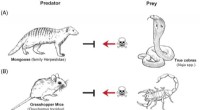
* Predation: One organism (the predator) kills and consumes another (the prey). This drives evolution and regulates population sizes.
* Parasitism: One organism (the parasite) benefits at the expense of another (the host), often living inside or on the host.
* Mutualism: Both organisms benefit from the interaction. For example, bees pollinate flowers while collecting nectar.
* Commensalism: One organism benefits while the other is neither harmed nor helped. For instance, barnacles on whales.
Interactions with the Environment:
* Resource Acquisition: Organisms obtain resources like sunlight (for plants), food, water, and shelter from the environment.
* Habitat Modification: Organisms can alter their environment through processes like burrowing, building nests, or creating trails. This can benefit or harm other organisms.
* Waste Production: All organisms produce waste. Some waste products can be harmful to the environment, while others are decomposed and recycled.
* Climate Regulation: Organisms influence climate through processes like photosynthesis (removing carbon dioxide) and respiration (releasing carbon dioxide).
* Evolutionary Adaptation: Organisms evolve over time to better suit their environment. This can include adaptations for acquiring resources, avoiding predators, or tolerating extreme conditions.
Key Concepts:
* Ecosystem: A community of interacting organisms and their physical environment.
* Food Web: A complex network of interconnected food chains showing energy flow and nutrient cycling within an ecosystem.
* Biodiversity: The variety of life within an ecosystem. It promotes stability and resilience.
* Ecological Balance: A state where populations of organisms remain relatively stable and the ecosystem functions smoothly.
Examples:
* A lion hunting a zebra: Predation.
* Trees absorbing sunlight for photosynthesis: Resource acquisition.
* Bacteria decomposing dead leaves: Waste production and nutrient cycling.
* A flock of birds migrating south for winter: Adaptation to environmental change.
* A beaver building a dam: Habitat modification.
Understanding these interactions is crucial for appreciating the intricate and interconnected nature of life on Earth and for developing effective conservation strategies.