Here's why:
* Central Nucleus: Eukaryotic cells have a well-defined nucleus enclosed by a nuclear membrane. This is where their genetic material (DNA) is stored and protected.
* Complicated Inner Structure: Eukaryotic cells have a variety of membrane-bound organelles, each with a specialized function. These include:
* Mitochondria: Responsible for energy production.
* Golgi apparatus: Processes and packages proteins.
* Endoplasmic reticulum: Involved in protein synthesis and lipid metabolism.
* Lysosomes: Digest cellular waste.
* Vacuoles: Store water and nutrients.
In contrast, prokaryotic cells (like bacteria) lack a nucleus and other membrane-bound organelles. Their genetic material is located in a region called the nucleoid, but it's not enclosed by a membrane.
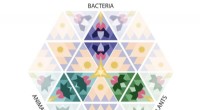
So, the presence of a true nucleus and a complex internal structure are the hallmarks of eukaryotic cells. This allows them to perform more complex functions than prokaryotic cells, which is why they make up all multicellular organisms, including plants, animals, fungi, and protists.