Here's a breakdown:
* Ribosomes: These are small, complex structures made of ribosomal RNA (rRNA) and proteins. They are the sites of protein synthesis, reading the genetic code from messenger RNA (mRNA) and assembling amino acids into polypeptide chains.
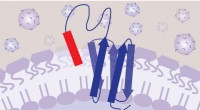
* Membrane Systems: Ribosomes are often attached to the endoplasmic reticulum (ER), a network of membranes within the cell. This association is referred to as "rough ER" due to the ribosomes attached to its surface. The ER plays a crucial role in protein synthesis, folding, and modification.
* Cytoplasm: Ribosomes can also be found free-floating in the cytoplasm, the gel-like substance that fills the cell. These free ribosomes synthesize proteins that will remain in the cytoplasm or be transported to other organelles.
So, in short, ribosomes are the protein synthesis factories of the cell, and they can be found both attached to membranes and scattered throughout the cytoplasm.