1. Organization:
* All living things are highly organized, with specialized structures that perform specific functions. This organization exists at various levels, from the cellular level to the level of organ systems and even ecosystems.
* This organization is maintained by the constant input of energy.
2. Metabolism:
* Organisms carry out a variety of chemical reactions collectively known as metabolism.
* This includes processes like breaking down nutrients for energy (catabolism) and building complex molecules (anabolism).
* Metabolism allows organisms to grow, reproduce, and maintain their internal environment.
3. Growth and Development:
* All organisms grow and develop over time, increasing in size and complexity.
* Growth involves an increase in the number of cells and/or the size of cells.
* Development refers to the changes in form and function that occur throughout an organism's life.
4. Reproduction:
* Organisms produce new individuals of their own kind through reproduction.
* Reproduction can be asexual (involving a single parent) or sexual (involving two parents).
* This ensures the continuity of life and the passing of genetic information to offspring.
5. Response to Stimuli:
* Living organisms respond to changes in their environment.
* These responses can be simple, like a plant turning towards light, or complex, like an animal fleeing from a predator.
* This ability to respond to stimuli helps organisms to survive and adapt to their surroundings.
6. Homeostasis:
* Organisms maintain a relatively stable internal environment, despite changes in the external environment. This is called homeostasis.
* Examples include maintaining body temperature, blood sugar levels, and water balance.
7. Adaptation:
* Over generations, organisms can evolve and adapt to their environment.
* This means that populations of organisms can change over time in response to selective pressures.
* Adaptation is essential for the survival and success of a species.
8. Genetic Material:
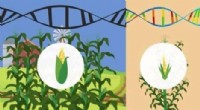
* All organisms possess genetic material, typically in the form of DNA, which carries the instructions for their development and function.
* This genetic information is passed on to offspring during reproduction.
It's important to note that while these characteristics are shared by all organisms, the specific ways in which they are expressed can vary widely across the tree of life.