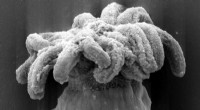
* Viruses: These are tiny infectious agents that are not considered living organisms because they cannot reproduce independently. They require a host cell to replicate.
* Prions: These are infectious proteins that can cause misfolding of other proteins in the body, leading to diseases like mad cow disease.
* Crystals: These are solid materials with a highly ordered, repeating arrangement of atoms or molecules. Examples include salt, diamonds, and sugar crystals.
* Water: This is a simple molecule that exists as a liquid, solid (ice), or gas (water vapor). While it's essential for life, it's not cellular in nature.
* Minerals: These are naturally occurring inorganic substances with a defined chemical composition and crystal structure. Examples include gold, quartz, and granite.
* Metals: These are elements that are typically shiny, malleable, and good conductors of heat and electricity. Examples include iron, copper, and silver.
* Plastics: These are synthetic materials made from polymers that are not cellular in nature.
It's important to note that while these things are not cellular, they can be found in living organisms or play a role in biological processes. For example, viruses can infect cells, prions can cause diseases in animals, and minerals are essential for the proper functioning of many biological systems.