Primary Producer → Primary Consumer → Secondary Consumer → Tertiary Consumer
Let's break it down:
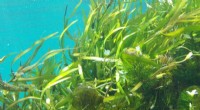
* Primary Producer: The starting point, usually a plant or algae that can produce its own food through photosynthesis. They capture energy from the sun.
* Primary Consumer: An organism that eats the primary producer. This is usually a herbivore (plant eater), like a rabbit or a deer.
* Secondary Consumer: An organism that eats the primary consumer. This is often a carnivore (meat eater), like a fox or a hawk.
* Tertiary Consumer: An organism that eats the secondary consumer. These are usually top predators, like a wolf or a lion.
Example:
* Sun → Grass → Grasshopper → Frog → Snake
Important Notes:
* Energy Transfer: Each time energy is transferred from one organism to another, some of it is lost as heat. This means that there's less energy available at each higher level of the food chain.
* Food Webs: Food chains are simplified representations. In nature, organisms often eat a variety of food sources, creating complex interconnected food webs.
Let me know if you'd like more details or want to explore a specific food chain!