Here's why:
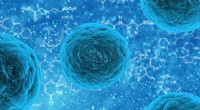
* Structure: The cell membrane is a thin, flexible layer composed primarily of a phospholipid bilayer. This bilayer has a hydrophilic (water-loving) head and a hydrophobic (water-fearing) tail, forming a barrier that prevents the passage of many substances.
* Selectivity: The cell membrane is selectively permeable, meaning it allows some substances to pass through while blocking others. This selectivity is crucial for maintaining the cell's internal environment and carrying out essential functions.
* Mechanisms: The membrane employs various mechanisms to control passage, including:
* Passive transport: Movement of substances across the membrane without requiring energy (e.g., diffusion, osmosis).
* Active transport: Movement of substances against their concentration gradient, requiring energy (e.g., protein pumps).
* Endocytosis and exocytosis: Processes where the cell membrane engulfs or releases larger molecules or particles.
In summary, the cell membrane acts as a gatekeeper, regulating the flow of nutrients, waste products, signaling molecules, and other essential materials, ensuring the cell's survival and proper functioning.