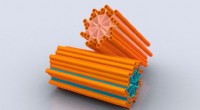
* Cells are the fundamental building blocks of all living organisms. They are the smallest units that can carry out all the processes of life, such as metabolism, growth, and reproduction.
* Tissues are groups of similar cells that work together to perform a specific function. They are like mini-teams within the body.
Here's a simple analogy:
* Imagine a brick wall. The bricks are like cells, each individual and essential.
* The wall is like a tissue, formed by many bricks working together to create a structure with a specific purpose (protection, support).
Here are some key points about their relationship:
* Cells make up tissues: Tissues are formed when similar cells cluster together and specialize in a particular task.
* Tissues are organized for specific functions: Different tissues work together to form organs, and organs work together to form organ systems, ultimately creating a whole organism.
* Cell specialization: Within a tissue, cells can specialize further to perform specific roles. For example, muscle tissue contains cells that specialize in contraction, while nervous tissue contains cells specialized in transmitting signals.
Here are some examples of tissues and the types of cells they contain:
* Epithelial tissue: Made of tightly packed cells that form linings and coverings (like the skin).
* Connective tissue: Made of cells scattered in a matrix (like bone, blood, and cartilage).
* Muscle tissue: Made of cells that can contract (like skeletal, smooth, and cardiac muscle).
* Nervous tissue: Made of cells that can transmit signals (like neurons).
Understanding the relationship between cells and tissues is crucial for understanding how the human body functions.