1. Fossil Record:
* Transitional fossils: These are fossils that exhibit traits of both ancestral and descendant species, providing strong evidence for evolutionary transitions. Examples include the transition from fish to tetrapods (e.g., Tiktaalik) and from dinosaurs to birds (e.g., Archaeopteryx).
* Fossil succession: Fossils appear in a consistent sequence in rock layers, with simpler organisms found in older layers and more complex ones in younger layers. This pattern strongly supports the idea of gradual change over time.
* Extinction: The fossil record reveals that many species have gone extinct, indicating that life on Earth is dynamic and constantly changing.
2. Comparative Anatomy:
* Homologous structures: These are structures with similar underlying anatomy in different species, even though they may have different functions. Examples include the bones in the forelimbs of humans, bats, whales, and horses. This suggests common ancestry.
* Analogous structures: Structures that have similar functions but different underlying anatomy. Examples include the wings of birds and insects. While they have the same function, they evolved independently, demonstrating convergent evolution.
* Vestigial structures: These are structures that are reduced or nonfunctional in a given species but are fully functional in ancestral species. Examples include the appendix in humans, the pelvic bones of whales, and the wings of flightless birds.
3. Molecular Biology:
* DNA and protein comparisons: Comparing the DNA and protein sequences of different species reveals similarities and differences. The more closely related two species are, the more similar their DNA and proteins.
* Universal genetic code: All known organisms share the same basic genetic code, which is strong evidence for a common ancestor.
* Gene duplication and evolution: Genes can be duplicated, and these copies can evolve new functions. This process is responsible for the diversity of life and provides evidence for adaptation.
4. Biogeography:
* Island biogeography: The unique distribution of species on islands provides evidence for evolution. For instance, the presence of endemic species (found only on specific islands) suggests they evolved in isolation.
* Continental drift: The movement of continents explains the distribution of related species across different continents. For example, fossils of certain land mammals are found on both South America and Africa, suggesting they were once connected.
5. Direct Observation:
* Evolution in action: Scientists have observed evolution happening in real-time, such as the evolution of antibiotic resistance in bacteria, pesticide resistance in insects, and the development of new beak shapes in finches.
6. Artificial Selection:
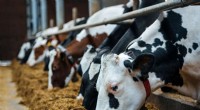
* Selective breeding by humans: The rapid evolution of domesticated plants and animals through selective breeding provides a model for natural selection. This demonstrates the power of selection in driving evolutionary change.
7. Developmental Biology:
* Embryonic development: Comparing the development of embryos in different species reveals striking similarities, suggesting common ancestry.
Conclusion:
The evidence for evolution is vast and diverse. From fossils to DNA, the evidence converges on the idea that life on Earth has evolved over millions of years through processes like natural selection, genetic drift, and adaptation. The scientific community overwhelmingly agrees that evolution is a fact, not a theory.