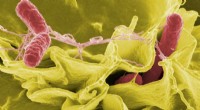
* Mitochondria: These are the powerhouses of the cell, responsible for generating energy through cellular respiration. They have their own DNA, separate from the cell's nuclear DNA, and replicate independently. This suggests they were once free-living bacteria that were engulfed by a larger cell and formed a symbiotic relationship.
* Chloroplasts: These are found in plant cells and are responsible for photosynthesis, the process of converting sunlight into energy. Like mitochondria, chloroplasts have their own DNA and replicate independently. This points to an origin as free-living bacteria that were incorporated into a larger cell through endosymbiosis.
The theory that mitochondria and chloroplasts are descendants of bacteria is called the endosymbiotic theory. It is widely accepted in the scientific community and is supported by a wealth of evidence.