Here's a breakdown of the major tissue types found in those structures:
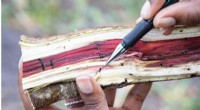
* Stem: Stems primarily consist of vascular tissue (xylem and phloem) for transporting water and nutrients, as well as ground tissue (parenchyma, collenchyma, and sclerenchyma) for support and storage. They also have an outer dermal tissue (epidermis) for protection.
* Leaves: Leaves have a similar makeup to stems, with vascular tissue for transport, ground tissue for photosynthesis, and dermal tissue (epidermis) for protection. They also have specialized cells called guard cells that control gas exchange through pores called stomata.
* Seeds: Seeds contain embryonic tissue that will develop into the new plant, endosperm for food storage, and seed coat for protection.
* Roots: Roots contain vascular tissue for water and nutrient absorption, ground tissue for storage, and dermal tissue (epidermis and root cap) for protection and absorption.
So, rather than talking about a single "tissue of the plant," it's more accurate to say that each plant structure is composed of different combinations of tissues, each with a specific function.