Cells are made of many different components, including:
* DNA (Deoxyribonucleic acid): This is the genetic material of the cell. It contains the instructions for building and maintaining the organism.
* RNA (Ribonucleic acid): This molecule helps to carry out the instructions encoded in DNA.
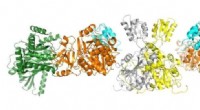
* Proteins: These are the workhorses of the cell, performing a wide variety of functions.
* Lipids (fats): These form the cell membrane, which acts as a barrier between the inside and outside of the cell.
* Carbohydrates (sugars): These provide energy for the cell and can be used for structural purposes.
* Water: This is essential for many cellular processes.
DNA itself is made of:
* Nucleotides: These are the building blocks of DNA. Each nucleotide consists of:
* A sugar molecule (deoxyribose)
* A phosphate group
* A nitrogenous base: Adenine (A), Guanine (G), Cytosine (C), or Thymine (T)
These nucleotides are linked together in a long chain, and the sequence of these bases forms the genetic code.
Let me know if you have any other questions!