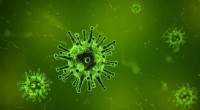
1. Attachment: The Vampirococcus cell attaches itself to the surface of its prey, usually another bacterium.
2. Penetration: It then uses a specialized structure called a "stalk" to pierce the prey's cell wall.
3. Parasitism: The Vampirococcus feeds on the prey's cytoplasm, effectively draining its nutrients.
4. Bud Formation: As the Vampirococcus feeds, it begins to form a bud, a small, spherical outgrowth on its surface.
5. Bud Growth: The bud gradually grows larger, eventually reaching the same size as the parent cell.
6. Separation: Once the bud is fully developed, it separates from the parent cell, becoming an independent Vampirococcus.
This budding process allows the Vampirococcus to multiply and continue its parasitic lifestyle, feeding on other bacteria.
Key points about Vampirococcus reproduction:
* Asexual reproduction: Budding is a form of asexual reproduction, meaning it involves only one parent cell.
* Unique adaptation: This parasitic lifestyle and budding reproduction are unique adaptations that allow Vampirococcus to thrive in its environment.
* Ecological importance: Vampirococcus plays a role in the natural control of bacterial populations in various environments.
Let me know if you'd like to know more about Vampirococcus or its unique adaptations!