Here's why:
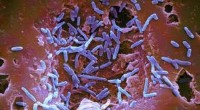
* Unicellular: Prokaryotes are single-celled organisms.
* Complex cell structure: While simpler than eukaryotic cells, prokaryotic cells have complex structures like cell walls, ribosomes, and DNA.
* No nucleus: Prokaryotes lack a membrane-bound nucleus, their DNA is located in a region called the nucleoid.
* Make up most of plankton: A significant portion of plankton, particularly the bacterioplankton, are composed of prokaryotes.
Important note: While the description fits prokaryotes, specifically bacteria, some protists are also unicellular and part of plankton. However, protists are eukaryotes, meaning they have a nucleus.