Microbiology requires a variety of specialized equipment to culture, manipulate, and analyze microorganisms. Here's a breakdown of some basic apparatus:
Culture and Growth:
* Incubator: A controlled environment to maintain optimal temperature, humidity, and CO2 levels for bacterial growth.
* Autoclave: A high-pressure steam sterilizer for killing all microbes, including spores, in media, glassware, and instruments.
* Petri dishes: Circular, shallow dishes with lids for culturing microorganisms on solid media.
* Test tubes: Glass tubes used for culturing microorganisms in liquid media.
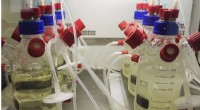
* Culture flasks: Larger glass containers used for culturing microorganisms in liquid media on a larger scale.
* Pipettes: Disposable, sterile pipettes used to transfer and measure precise volumes of liquid media or reagents.
* Microscope slides: Thin, flat pieces of glass for examining microorganisms under a microscope.
* Cover slips: Small, thin pieces of glass used to cover microscope slides.
* Microscope: A powerful instrument used to visualize microorganisms.
* Bunsen burner: Used for sterilizing instruments and creating a sterile working environment.
* Loop and needle: Used for transferring and streaking microorganisms onto media.
* Agar: A solidifying agent used in solid media to culture microorganisms.
Sterilization and Disinfection:
* Sterilizing solutions: Solutions like bleach, ethanol, or iodine used to disinfect surfaces and instruments.
* Sterile gloves: Disposable gloves used to prevent contamination of cultures and instruments.
* Sterile gowns and masks: Used to protect the researcher and the cultures from contamination.
* Biohazard containers: Designated containers for collecting and discarding contaminated materials.
Analysis and Identification:
* Spectrophotometer: Used to measure the turbidity (cloudiness) of liquid cultures, indicating bacterial growth.
* Colony counter: Used to count bacterial colonies on agar plates for quantifying growth.
* Microscope slide staining kit: Used to color bacterial cells for better visualization under the microscope.
* Gram stain kit: Used to differentiate bacteria based on their cell wall structure.
* Biochemical test kits: Used to identify specific biochemical reactions performed by bacteria.
Additional equipment:
* Centrifuge: Used to separate cells from liquids.
* Refrigerator: Used to store cultures and reagents at low temperatures.
* Hot plate: Used to heat media and solutions.
* pH meter: Used to measure the acidity or alkalinity of solutions.
* Water bath: Used to incubate samples at a constant temperature.
This list is not exhaustive but provides a good overview of the basic apparatus commonly used in microbiology. Specific equipment needs will vary depending on the research being conducted.