* Eukaryote: This refers to organisms whose cells have a nucleus and other membrane-bound organelles. Humans are complex multicellular organisms with highly organized cells.
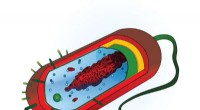
* Prokaryote: These are single-celled organisms that lack a nucleus and other membrane-bound organelles. Bacteria and archaea are prokaryotes.
* Protist: This is a diverse group of mostly single-celled eukaryotic organisms. Examples include algae, amoebas, and slime molds.
* Fungus: Fungi are eukaryotic organisms that obtain nutrients by absorbing organic matter. They include mushrooms, yeasts, and molds.
Therefore, humans are classified as eukaryotes.