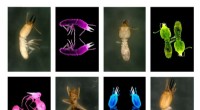
1. Cells: The basic, fundamental unit of life. All living organisms are made up of one or more cells. Cells carry out all the functions necessary for life, such as respiration, metabolism, and reproduction.
2. Tissues: A group of similar cells that work together to perform a specific function. Examples include muscle tissue, nervous tissue, and epithelial tissue.
3. Organs: A structure composed of two or more different tissues that work together to perform a specific function. Examples include the heart, lungs, stomach, and brain.
4. Organ Systems: A group of organs that work together to carry out a major bodily function. Examples include the digestive system, circulatory system, and nervous system.
5. Organism: A complete living being that can carry out all life processes independently. This is the highest level of organization within an individual.
This hierarchy of organization helps us understand how complex organisms function by breaking down their structure and function into smaller, more manageable units.