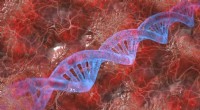
1. Variation: Individuals within a population exhibit variation in their traits, meaning they are not all identical. This variation can be caused by genetic mutations, genetic recombination, or environmental factors.
2. Natural selection: Individuals with traits that make them better suited to their environment are more likely to survive and reproduce, passing on those advantageous traits to their offspring. This process, known as natural selection, leads to a gradual change in the genetic makeup of a population over time.
These two principles work together to drive evolution. Variation provides the raw material for natural selection to act upon, and natural selection determines which variations become more common in a population.