* Preserving Genetic Integrity: Chromosomes carry genes, the blueprints for building and maintaining an organism. Mitosis ensures that each daughter cell receives a complete and accurate copy of the genetic material. If chromosomes were not separated carefully, daughter cells could end up with missing or duplicated genes, leading to developmental problems or disease.
* Maintaining Correct Gene Dosage: Each gene needs to be present in the correct number of copies within a cell. During mitosis, the number of chromosomes (and therefore genes) is doubled, and then precisely halved again during cell division, maintaining the proper gene dosage in each new cell.
* Ensuring Proper Development: The proper separation of chromosomes during mitosis is essential for the development of multicellular organisms. Cells need to divide correctly and produce identical copies of themselves to create tissues and organs. Errors in chromosome separation can lead to abnormal cell growth, developmental defects, and even cancer.
Here's a breakdown of how this relates to mitosis:
1. DNA Replication: Before mitosis, the genetic material (DNA) is replicated, creating two identical copies of each chromosome.
2. Chromosome Condensation: The replicated chromosomes condense and become visible as distinct structures. This helps ensure they can be separated properly.
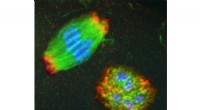
3. Spindle Formation: A structure called the spindle forms, made of microtubules, which attach to the chromosomes at specific points called kinetochores.
4. Chromosome Alignment: The spindle fibers pull the chromosomes towards the center of the cell, ensuring they are lined up in the middle (metaphase plate).
5. Sister Chromatid Separation: The sister chromatids (the two identical copies of each chromosome) are pulled apart by the spindle fibers towards opposite poles of the cell.
6. Nuclear Division: Two new nuclei form around the separated chromosomes, each containing a complete set of genetic information.
7. Cytokinesis: The cytoplasm divides, creating two daughter cells, each with an identical set of chromosomes and genes.
In short, the meticulous separation of chromosomes during mitosis is a vital process for preserving the genetic information encoded in genes, ensuring the correct gene dosage, and allowing for proper cell division and organismal development.