The Limitations of Light Microscopy:
* Resolution: Light microscopes are limited in their ability to distinguish between two closely spaced objects. This is called the resolution limit and is approximately 200 nanometers. This means that anything smaller than 200 nanometers will appear blurred or even invisible.
* Contrast: Light microscopy relies on light passing through the specimen. If the specimen has a similar refractive index to the surrounding medium, it won't appear very different and will be hard to see.
* Wavelength of Light: The wavelength of visible light used in light microscopy limits the resolution, preventing the visualization of structures smaller than its wavelength.
Why Certain Structures Are Visible:
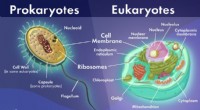
* Size: Structures that are larger than 200 nanometers, like the nucleus, cell membrane, and some organelles (e.g., mitochondria, chloroplasts), are readily visible under a light microscope.
* Contrast: Structures with a different refractive index than the surrounding medium will scatter light differently, making them appear darker or brighter, increasing contrast and visibility.
* Staining: Many techniques use dyes to stain specific structures, increasing their contrast and allowing them to be seen under a light microscope.
* Preparation: The way the specimen is prepared for observation also plays a role. Thin slices (sections) or flattened preparations help with light penetration and better visibility.
What Structures Are Not Visible Under a Light Microscope:
* Smaller Structures: Ribosomes, proteins, DNA molecules, and other smaller structures are too small to be resolved by a light microscope.
* Transparent Structures: Some structures are transparent and have a similar refractive index to the surrounding medium, making them difficult to see without staining.
Alternative Techniques for Visualizing Smaller Structures:
* Electron Microscopy: Electron microscopes use beams of electrons instead of light, allowing for much higher resolution (down to 0.1 nanometers). They can reveal the detailed internal structure of cells and even individual molecules.
* Fluorescence Microscopy: This technique uses fluorescent dyes that bind to specific structures, making them visible against a dark background.
* Super-resolution Microscopy: Advanced techniques like stimulated emission depletion (STED) microscopy can overcome the diffraction limit of light microscopy and visualize structures smaller than 200 nanometers.
In summary: Light microscopes are a powerful tool for studying cells, but their limitations mean that only certain structures are visible. Using alternative techniques like electron microscopy or fluorescence microscopy allows us to explore the intricate details of the cell at much higher resolution.