Here's why:
* Evolution is not linear: Life on Earth didn't evolve from simple to complex in a straight line. Instead, different lineages branched off from common ancestors, evolving independently and adapting to their environments.
* Simultaneous evolution: Many different species evolve simultaneously, with no clear hierarchy.
* No "end goal": Evolution doesn't have a predetermined goal. It's driven by natural selection, which favors traits that increase an organism's chances of survival and reproduction in its environment.
What we CAN talk about is the evolutionary history of different groups:
* The Tree of Life: We can trace the evolutionary relationships between different species and groups of organisms. This is represented by a phylogenetic tree, which shows how different lineages have diverged over time.
* Fossil Record: Fossils provide evidence of past life and help us understand how species have changed over millions of years.
* Genetic Evidence: Comparing DNA sequences allows us to reconstruct evolutionary relationships and track changes in genetic makeup.
Examples of evolutionary history:
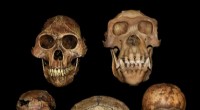
* Primates: Humans are part of the primate lineage, which evolved from early mammals around 65 million years ago.
* Birds: Birds evolved from theropod dinosaurs, a group that includes Tyrannosaurus Rex.
* Mammals: Mammals arose from synapsid reptiles, a group that also includes pelycosaurs like Dimetrodon.
Instead of an "order of evolution," it's more helpful to think about:
* Common Ancestry: All life on Earth shares a common ancestor, and we can trace their evolutionary relationships.
* Adaptation: Species evolve adaptations that allow them to survive and reproduce in their specific environment.
* Diversity: Evolution has produced an incredible diversity of life forms on Earth, all with their own unique evolutionary history.
Let me know if you have any more specific questions about evolution.