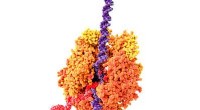
1. Starch breakdown to glucose: Starch is first broken down into simpler sugars, primarily glucose, through the process of hydrolysis. This process is catalyzed by enzymes like amylase in the digestive system or in plant cells.
2. Glucose transport: Glucose then enters the cells and is transported to the cytoplasm, the site of glycolysis.
3. Glycolysis: Glucose is broken down into pyruvate in a series of ten enzymatic reactions called glycolysis. This process occurs in the cytoplasm and produces a small amount of ATP (2 molecules per glucose molecule) and reduced electron carriers (NADH).
4. Pyruvate oxidation: The pyruvate molecules then move into the mitochondria and are oxidized into acetyl-CoA, a key molecule for the next stage.
5. Krebs cycle (Citric Acid Cycle): Acetyl-CoA enters the Krebs cycle, a series of reactions that further oxidize the carbon atoms from glucose, generating more ATP (2 molecules per glucose molecule), reduced electron carriers (NADH and FADH2), and carbon dioxide as a waste product.
6. Electron transport chain: The reduced electron carriers (NADH and FADH2) deliver their electrons to the electron transport chain, embedded in the mitochondrial membrane. As electrons move along the chain, their energy is used to pump protons (H+) across the membrane, creating a concentration gradient. This proton gradient drives the production of ATP by oxidative phosphorylation, the main source of ATP in respiration.
Therefore, starch is first broken down into glucose, then glucose is broken down through glycolysis and further oxidized in the Krebs cycle, ultimately leading to the production of ATP in the electron transport chain.