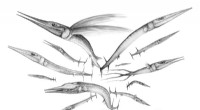
* Defense against herbivores: When a plant is attacked by herbivores, the sharp raphide crystals can pierce the mouth or digestive tract, causing irritation and discomfort. This discourages further feeding by the herbivore.
* Protection from pathogens: Some evidence suggests that raphide crystals may also help protect the plant from fungal and bacterial infections.
* Potential for biomineralization: In some cases, raphide crystals may serve as a storage site for calcium, which can be re-mobilized by the plant if needed.
It's important to note that while raphide crystals are generally considered a defense mechanism, their exact role and the specific mechanisms of their action are still being investigated.