Here's a more detailed explanation:
* Glucose cannot passively diffuse across the cell membrane: The cell membrane is selectively permeable, meaning it only allows certain substances to pass through. Glucose is a large, polar molecule, and it cannot simply diffuse across the lipid bilayer of the cell membrane.
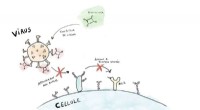
* Carrier proteins facilitate transport: Carrier proteins act like "doormen" for glucose. They bind to glucose molecules on one side of the cell membrane and then change shape, allowing the glucose to move to the other side of the membrane.
* Facilitated diffusion: This process is called facilitated diffusion because it requires a carrier protein but does not directly use energy (ATP) to move the glucose. Instead, it relies on the concentration gradient – glucose moves from an area of high concentration (outside the cell) to an area of low concentration (inside the cell).
Two main carrier proteins involved in glucose transport into muscle cells are:
* GLUT4 (glucose transporter type 4): This protein is insulin-sensitive and is primarily responsible for glucose uptake into skeletal muscle cells. Insulin binds to receptors on the muscle cell surface, triggering a signaling cascade that leads to the translocation of GLUT4 from intracellular vesicles to the cell membrane, where it can facilitate glucose transport.
* GLUT1 (glucose transporter type 1): This protein is always present in the cell membrane and provides a basal level of glucose uptake.
In summary: Carrier proteins, particularly GLUT4, play a vital role in transporting glucose into muscle cells, ensuring the availability of this essential energy source for muscle contraction and other metabolic processes.